
The India-US trade deal has offered a much-needed breather for the Indian information technology (IT) industry, which has been grappling with global macroeconomic uncertainty and subdued client spending over the past few years.

The World Bank has increased India's economic growth projection for FY27 to 6.6 per cent, citing resilient domestic demand, while simultaneously cutting its global economic growth outlook due to the conflict in West Asia.

China has welcomed the appointment of Vikram Doraiswami as the new Indian Ambassador, expressing optimism for improved Sino-India relations. Doraiswami, a seasoned diplomat with experience in China, is expected to play a key role in managing complex bilateral issues and fostering cooperation.

India on Friday launched a highly coordinated, priority operation to safely guide 13 Indian-flagged commercial vessels out of the volatile Strait of Hormuz, the ministry of ports, shipping, and waterways announced on Friday.

Estonian tech startups in AI, cybersecurity, defence, and medicine are showing interest in collaborating with India, aiming to tap into its vast market. Latitude59, a prominent startup conference, is considering hosting a networking event in India next year to foster these partnerships.

Indian benchmark indices Sensex and Nifty climbed in early trade, driven by a significant drop in crude oil prices following reports of a potential 60-day ceasefire extension between the US and Iran, coupled with positive global market trends and buying in IT stocks.

India's mergers and acquisitions (M&A) market is projected to maintain an annual run-rate of approximately $200 billion, evenly split between domestic, inbound, and outbound transactions, despite global geopolitical turbulence, according to Rajesh Singhi, global co-head, M&A Advisory, Standard Chartered Bank.

The Indian government has increased import duties on gold and silver from 6 per cent to 15 per cent to curb inbound shipments of precious metals amid a rising import bill due to the West Asia crisis.
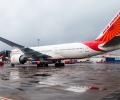
Indian carriers have cancelled over 10,000 flights since the onset of the West Asia conflict, as escalating tensions and airspace restrictions disrupted international operations, a senior government official said.

Indian benchmark indices Sensex and Nifty closed lower, snapping a two-day rally, as a spike in crude oil prices, triggered by reports of fresh US military operations in southern Iran, dampened investor sentiment and reignited fears of renewed energy supply disruptions.
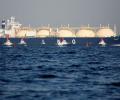
Iranian Deputy Foreign Minister Kazem Gharibabadi has urged India to take the lead in bringing peace to West Asia, highlighting the UAE's role in stalling BRICS consensus on the conflict. Gharibabadi also discussed a new framework with Oman for merchant vessels passing through the Strait of Hormuz.

Indian stock markets experienced a significant sell-off, with the Sensex tumbling over 1,300 points, driven by escalating crude oil prices due to US-Iran tensions and Prime Minister Narendra Modi's call for austerity measures, which amplified investor concerns about India's economic outlook.

Data reveals a disturbing trend of Indian worker deaths abroad, particularly in Gulf nations, alongside numerous complaints of exploitation and labour rights violations.

Indian stock markets are expected to remain highly sensitive to geopolitical developments, particularly the US-Iran situation, and crude oil prices this week, with analysts also highlighting the influence of the rupee-dollar trend, foreign investor activity, and upcoming inflation data.

Sarvam AI, an Indian full-stack sovereign artificial intelligence company, has achieved unicorn status after raising $234 million in a Series B funding round led by HCLTech and Bessemer Venture Partners, with HCLTech acquiring a 10.46 per cent stake.

Cleaner balance sheets, regulatory support and strong growth prospects helped Indian private banks attract over $6 billion in foreign capital, with more deals expected in 2026.

Indian benchmark equity indices, Sensex and Nifty, surged over 1 per cent, driven by a significant correction in crude oil prices and a global market rally, fueled by improving sentiment surrounding potential US-Iran negotiations.

Indian benchmark equity indices, the BSE Sensex and NSE Nifty, experienced a significant drop in early trade due to elevated oil prices, weak global market trends, and renewed fears of military operations in the Middle East following US President Donald Trump's statements regarding Iran. Track Sensex, Nifty on May 20.

As per the new rule, foreigners who file to renew their EAD on or after October 30, 2025, will no longer receive an automatic extension, the DHS said in a news release.

The US Department of Homeland Security has clarified that not all immigrants seeking green cards will be required to return to their home country to make such applications, partially walking back a previous announcement.

Indian equity benchmark indices, Sensex and Nifty, tumbled nearly 2 per cent for the fourth consecutive session, driven by elevated crude oil prices, escalating US-Iran tensions, unabated foreign fund outflows, and a depreciating rupee.
Indian equity benchmark indices, Sensex and Nifty, tumbled nearly 2 per cent for the fourth consecutive session, driven by elevated crude oil prices, escalating US-Iran tensions, unabated foreign fund outflows, and a depreciating rupee.

India has firmly denied allegations that the US Navy is using its ports to launch attacks against Iran, reaffirming its commitment to strategic autonomy and non-alignment in international conflicts.

'Every year we import approximately $70 billion worth of gold -- closer to $72 billion in 2025-2026, an all-time record.' 'There is no parallel for this anywhere in the world. And this love for gold will not disappear overnight.'
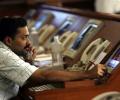
Indian benchmark indices Sensex and Nifty experienced a significant slump in early trade, mirroring weak global trends, as escalating tensions in West Asia, particularly a drone attack on the UAE's Barakah nuclear facility, pushed crude oil prices higher. Track Sensex, Nifty50 movement and key market drivers for May 18, 2026.

Foreign investors fled Indian equities in 2025 at a scale never seen before, pulling out a record Rs 1.6 lakh crore (USD 18 billion) as volatile currency movements, global trade tensions, especially potential US tariffs, and stretched valuations eroded risk appetite, though flows are expected to turn sustainably positive in 2026.

Rupert Lowe, leader of the far-right Restore Britain party in the UK, has sparked controversy with anti-immigration posts targeting Indian and Pakistani immigrants, leading to a social media backlash and raising concerns ahead of a crucial by-election.

Indian benchmark indices Sensex and Nifty experienced volatile trade, declining in early deals before fluctuating, as investors reacted to unabated foreign fund outflows and rising geopolitical uncertainties, particularly in West Asia.

Indian stock markets rallied in early trade after US President Donald Trump announced a halt to planned military strikes on Iran, citing requests from Gulf leaders and ongoing "very big discussions" that could lead to a deal. This de-escalation, coupled with foreign fund inflows and gains in IT and Adani group stocks, contributed to the positive market sentiment. Track Sensex and Nifty on May 19, 2026.

Domestic Institutional Investors (DIIs) have significantly increased their holdings in Nifty 500 companies, reaching a record 20.9 per cent by the end of March, while Foreign Portfolio Investors (FPIs) reduced their ownership to an all-time low of 17.1 per cent, according to Motilal Oswal Financial Services.
Indian investors have seen their wealth erode by a staggering Rs 16.77 lakh crore over four trading sessions, as the markets faced deep losses driven by elevated crude oil prices, geopolitical tensions, persistent foreign fund outflows, and a record-low rupee.

President Droupadi Murmu on Monday conferred seven Kirti Chakras, including two posthumously, to personnel of the armed forces displaying raw courage, unparalleled bravery and total disregard for personal safety in the line of duty.

Through his commitment to democratic norms, debate, dissent and constitutionalism, Jawaharlal Nehru helped ensure that parliamentary democracy took deep root in independent India. Utkarsh Mishra evaluates Nehru's 17 years as India's first prime minister, examining his role in nation-building, democratic institution-building, economic planning, scientific advancement and foreign policy.

Sensex gains over 400 points while Nifty trades above 23,800 amid strong IT sector buying.

While the Andaman and Nicobar islands serve as a vital, stationary asset for projecting power in the Indian Ocean, referring to them as an unsinkable aircraft carrier ignores key military and geopolitical limitations, explains Commodore Venugopal Menon (retd).
Indian benchmark indices, Sensex and Nifty, closed marginally higher after a volatile trading session, driven by value buying in IT and select blue-chip counters, despite global crude price hikes and a weak rupee.

India is closely monitoring Sri Lanka's decision to offer foreign investors control of an airport near the China-controlled Hambantota port, as it could present a rare opening for Indian firms seeking strategic footholds in the Indian Ocean.

External Affairs Minister S Jaishankar raised India's concerns with US Secretary of State Marco Rubio regarding changes to US visa and immigration policies, emphasising that legal mobility should not be negatively affected. Rubio acknowledged potential 'bumps' during the transition as the US aims to improve its immigration system.
Indian benchmark equity indices Sensex and Nifty surged in early trade, driven by a sharp correction in crude oil prices below USD 100 per barrel and a rally in global markets, fuelled by improving sentiment surrounding US-Iran negotiations.

'Once the currency goes out of the hand, then possibly your major challenge is that it will not come back.'
